The Real Truth: Kobo Clara Colour or Dell Xps 16 2026?
Category: Laptops
Introduction
When shopping for personal computing devices, buyers increasingly face a spectrum of specialized hardware rather than one-size-fits-all machines. The Kobo Clara Colour and the Dell XPS 16 2026 sit at very different points on that spectrum: one is an e‑reader optimized for long-form reading and eye comfort, the other is a premium 16‑inch laptop aimed at content creators and power users. Comparing them directly may feel like apples and oranges, but many real-world buyers weigh the same core tradeoffs — portability, battery life, display comfort, software ecosystem, and value for specific tasks.
This article breaks down what each product truly delivers, outlines pros and cons for typical buyers, provides a focused comparison table, and finishes with a practical buying guide to help readers select the right device for their needs. The goal is an evidence‑based, use‑centered analysis rather than a feature checklist isolated from everyday workflows.
How to read this comparison
The Kobo Clara Colour is evaluated as an e‑ink, reading‑first device. The Dell XPS 16 2026 is evaluated as a mainstream premium laptop in the 16‑inch category. The comparison emphasizes actual user scenarios: commuting, study and research, professional content creation, long reading sessions, and light computing on the go. Where relevant, battery life and portability are discussed in the context of those scenarios instead of abstract benchmark numbers.
Product analysis — Kobo Clara Colour
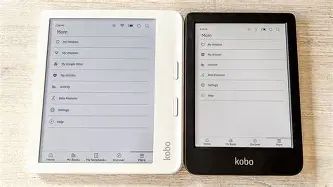
The Kobo Clara Colour is built around one central idea: make digital reading feel closer to reading paper, while adding modest color capability for magazines, comics, and educational content. The device uses an E Ink color layer (a Kaleido-style approach or equivalent color e-ink variant) that prioritizes low power draw and high contrast in ambient light, rather than bright backlit color like a tablet.
Real-world strengths of an e‑reader such as the Kobo Clara Colour include:
- Comfort for long reading sessions: The reflectance-based display reduces blue light and glare when compared to glass OLED/LCD panels. For people who read for hours a day (students, researchers, or heavy fiction readers), eye fatigue is significantly lower.
- Battery endurance: Because the display only draws power when refreshing a page, the Clara Colour can last days to weeks on a single charge under normal use—ideal for travel and long commutes.
- Focused experience: An e‑reader minimizes distractions from notifications and full‑web browsing, helping readers stay engaged with the text.
- Color for selective content: The color layer allows comics, educational diagrams, and light‑colored magazines to be legible and more useful than on monochrome e‑ink devices.
Limitations and tradeoffs are equally important. The Clara Colour is not a replacement for a full laptop or tablet:
- Performance and app ecosystem: It does not run desktop or mobile productivity apps in the way a laptop does. Web browsing, video playback, and multitasking are very limited.
- Color fidelity and refresh: Color e‑ink delivers muted tones and slower refresh than emissive displays, which can make fast animations or video impractical and some color‑critical content less accurate.
- File and workflow constraints: Document annotation, file organization, and advanced PDF workflows can feel slower than on a laptop. Although modern e‑readers support annotations and syncing, complex multi‑file research workflows are more efficient on a full computer.
Who benefits most from the Kobo Clara Colour?
The ideal buyer is someone who primarily reads books, long articles, or comics, and wants a device that maximizes comfort and battery life. Students who read textbooks and highlight passages, commuters who read on public transport, and readers who want a distraction‑free environment will find clear value here. It is also a strong second device for heavy laptop users who want a specialized reading tool for long sessions.
Product analysis — Dell XPS 16 2026
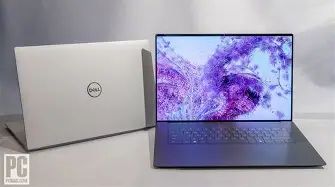
The Dell XPS line has long targeted premium users who want a balance of performance, build quality, and portability. The XPS 16 2026 continues this lineage with a larger 16‑inch display size, slim chassis, and configurations that target creators and professionals who need more screen real estate without sacrificing mobility.
In practical terms, the XPS 16 2026 aims to serve as a primary computing device for a wide range of users:
- Content creation and productivity: The larger display and beefier CPU/GPU options make the XPS 16 suitable for photo editing, video timelines, code and multitasking, and general office work.
- Display quality: Premium XPS models typically offer high-resolution panels with wide color gamut options (OLED or mini‑LED variants), making them suitable for color work and media consumption.
- Portability balance: While larger than a 13–14 inch laptop, the XPS 16 is engineered to be thin and lightweight for its class; it is a compromise between a desktop replacement and a truly ultraportable device.
But buyers should be clear about tradeoffs:
- Battery life vs. performance: High‑performance components and bright, high‑resolution displays draw more power. Real‑world battery life depends heavily on configuration and usage (web browsing vs. video editing).
- Cost: Premium materials and higher‑end CPU/GPU options raise the price. Buyers should evaluate whether they need top-tier configurations or can save by choosing mid‑range parts.
- Heat and throttling: Thin chassis designs sometimes require thermal compromises. Under sustained heavy workloads, some configurations may throttle performance to manage heat.
Who benefits most from the Dell XPS 16 2026?
Professionals who require a versatile primary machine—designers, editors, software developers, and power users—will appreciate the XPS 16. It is well suited for those who want a single machine to handle everything from drafting documents and video editing to web conferencing and light gaming. It is less ideal for users whose primary need is ultra‑long battery life for passive tasks like extended reading.
Looking for the best Laptops & Computers deals on Amazon?
View Offers →Pros & Cons
Kobo Clara Colour — Pros
- Exceptional reading comfort for long sessions due to reflective e‑ink technology
- Very long battery life compared with general-purpose devices
- Lightweight and highly portable for one‑hand reading
- Color e‑ink support expands usability to comics and illustrated materials
- Minimal distractions — focused reading environment
Kobo Clara Colour — Cons
- Limited multitasking and app ecosystem compared to tablets and laptops
- Color is muted and slower to refresh than emissive screens
- Not suitable for video, heavy annotation workflows, or productivity software
- Smaller screen size constrains side‑by‑side reading and complex PDFs
Dell XPS 16 2026 — Pros
- Powerful, versatile machine capable of creative and productivity workloads
- Large, high‑quality display suitable for multitasking and color work
- Premium build and port selection for professional use
- Can serve as a single, consolidated primary device for most users
- Strong keyboard and trackpad experience for extended typing sessions
Dell XPS 16 2026 — Cons
- Heavier and bulkier than small ultraportables or dedicated e‑readers
- Battery life can vary widely — high performance comes at a power cost
- Higher price point for top configurations
- Possible heat management and fan noise under sustained load
Comparison table — Kobo Clara Colour vs Dell XPS 16 2026
| Attribute | Kobo Clara Colour | Dell XPS 16 2026 |
|---|---|---|
| Device type | Dedicated e‑reader (color e‑ink) | Premium 16‑inch laptop |
| Primary use cases | Long‑form reading, comics, textbooks, distraction‑free reading | Content creation, productivity, media consumption, general computing |
| Display | Reflective color e‑ink — easy on eyes, muted color | High‑resolution emissive panel (OLED/mini‑LED options) — bright and vivid |
| Portability | Very light, pocketable in larger coats or small bags | Reasonably portable for a 16‑inch laptop, fits larger backpacks |
| Battery life | Measured in days to weeks (reading‑centric usage) | Measured in hours; varies by configuration and workload |
| Performance | Optimized for page refresh and simple UI — not for compute tasks | High performance options available for demanding tasks |
| Connectivity & ports | Basic: Wi‑Fi, often Bluetooth for audio; limited ports | Multiple ports (USB‑C/Thunderbolt, HDMI/DisplayPort options depending on model) |
| Software ecosystem | Reading apps, ebook stores, library integration | Full desktop OS with broad app availability |
| Best for | Readers, commuters, students focused on reading | Professionals, creators, students needing a full computing environment |
| Price bracket | Entry to mid-range device pricing | Mid to high-range, depending on configuration |
Real‑world use cases and buyer priorities
Understanding how people actually use these devices helps frame the decision beyond specs. Below are common buyer profiles and which device aligns best with each.
Heavy reader and commuter
Priority: eye comfort, battery life, one‑hand use.
Recommendation: Kobo Clara Colour. For people who read on trains, flights, or in bed, the e‑ink display is far more forgiving. The weight and battery endurance reduce friction — fewer chargers and less shoulder strain during commutes.
Student balancing reading and coursework
Priority: reading textbooks, annotating PDFs, writing essays, multitasking.
Recommendation: If the student’s primary activity is reading and annotating textbooks, the Kobo Clara Colour is a strong companion device. However, if classes require frequent writing, programming, or running specialized applications, the Dell XPS 16 is the better all‑in‑one option. Many students benefit from owning both: an e‑reader for heavy reading and a laptop for work.
Creative professional (photo/video/graphic design)
Priority: color accuracy, processing power, large workspace.
Recommendation: Dell XPS 16 2026. The laptop’s higher resolution, color‑accurate display options and more capable processors/GPU configurations make it fit for production work.
Freelancer who works on the go
Priority: flexibility, battery life during long days, ability to respond to tasks quickly.
Recommendation: Dell XPS 16 is a practical primary device for most freelancers; an e‑reader could serve as a secondary device for recreational reading between tasks.
Buying guide — how to decide
Use the following checklist to turn priorities into a decision. Read each item and check whether it is a must‑have, nice‑to‑have, or irrelevant.
1. What is the primary task?
If the primary task is reading—books, long articles, comics—choose an e‑reader. If the primary task includes content creation, coding, or any multitasking requiring desktop apps, choose a laptop.
Looking for the best Laptops & Computers deals on Amazon?
Shop Amazon →2. How important is screen comfort and eye strain?
Very important: prefer e‑ink. Moderately important: consider laptop with blue light mitigation and good display calibration tools.
3. How much portability matters?
For the lightest, most pocketable option, an e‑reader wins. For a balance of power and portability, a 16‑inch premium laptop can still be reasonable if a backpack is acceptable.
4. Battery life expectations
Want to go days without charging? E‑reader. Need all‑day productivity on a single charge? Look for laptop configurations with larger battery options, tune display brightness, and choose efficient processors.
5. Budget and total ownership cost
Consider both device price and potential accessory costs (cases, external storage, docks). A Kobo Clara Colour tends to be substantially cheaper than a high‑end Dell XPS 16 configuration. Factor in whether multiple devices are acceptable—some buyers prefer a specialized e‑reader plus a budget laptop, which can be less costly than a single top‑tier laptop.
6. Ecosystem and file compatibility
Confirm that the formats, file sync services, and annotation workflows align with daily habits. E‑readers often support major ebook formats and library lending, while laptops support a broad range of desktop tools.
7. Futureproofing and resale
Laptops generally retain broader resale value if they have upgradable ports and a healthy app ecosystem. E‑readers are highly specialized; resale markets exist but are smaller.
Practical tips before purchasing
- Try the devices in person where possible. Reading on e‑ink feels different than on paper; conversely, a laptop screen’s color balance is easier to assess in person.
- Consider the “second device” approach: many people pair a lightweight e‑reader for leisure reading with an affordable laptop for productivity. This combination often delivers the best user experience across tasks.
- Check warranty and service options: laptops may need repairs or upgrades, and premium support plans can be worth the cost for professional users.
- Read real user reviews focused on long‑term durability and battery behavior under realistic workloads, not just benchmark data.
Conclusion
In the debate between the Kobo Clara Colour and the Dell XPS 16 2026, the correct choice depends primarily on what a buyer intends to do every day. The Kobo Clara Colour excels at its narrow, important mission: making long‑form reading comfortable, portable, and distraction‑free, with the added benefit of limited color support for illustrated content. The Dell XPS 16 2026 is a flexible, powerful primary machine built for creators, multitaskers, and professionals who need a full desktop experience in a portable package.
For readers whose days are dominated by text and who prize battery life and eye comfort, the Kobo Clara Colour is the rational, focused choice. For those who require performance, a large, color‑accurate display, and the versatility of a full operating system, the Dell XPS 16 2026 is the better fit. Many users find that owning both—an e‑reader for extended reading and a laptop for work—provides the best balance between comfort and capability.
Ultimately, the “real truth” is that these devices serve complementary roles rather than directly competing ones. Buyers should let primary daily tasks, portability needs, and budget guide their decision rather than chasing feature parity across fundamentally different form factors.